The Bridge- Representation

What stereotypes do you know of the countries Sweden and Denmark and about their people?

  • The are neutral in everything- never get involved with wars or conflicts
  • Tall- blonde hair and blue eyes
  • Vikings
  • Education is very high standard

Does The Bridge conform to or break these stereotypes?

Partly based on the difference of Swedes/Danes

  • Danes- like beer and smoking. Densely-populated country Landscape not that different from The Netherlands, Northern Germany, Belgium and Northern France.
  • Swedes- about their seriousness and tendency to always follow the rules. Once you get out of Malmo area, you’re very quickly in forests, where there are all sorts of wild animals, like wild boar, elks and deer.

David Gauntlett- The Bridge

https://www.bbc.co.uk/programmes/articles/l9KPrlQqjCN9lrtLSPGq9N/characters

How are they described on the website?

  • Saga: heroic genius who is judged by Hanne for being socially challenged. Emphasis on her ‘following the rule book’
  • Hanne: She is less accepting of Saga and Sweden’s political correctness

How are the characters constructed to create these impressions?


How might audiences interact with the representations?

Audiences might feel a sense of sympathy with Saga that she is being blamed for the imprisonment of Martin. This is reinforced when Hanne is injured in the episode and Saga saves her. Likewise, the audience might feel that Hanne is right for being untrusting of Saga.

Which characters might different individuals identify with and why?

Individuals might identify with Saga due to her being more excluded in the workforce, her colleagues and friends don’t necessarily understand her and she is often criticised for this. Hanne on the other hand is represented as quite cold-hearted towards Saga, although she attempts to be professional despite her views, nevertheless her behaviour is highlighted through scenes with Saga.

Is there a diversity of representations, as suggested by Gauntlett?

There are many female characters yet a lack of people from an ethnic minority background. It could be argued that this is playing into the stereotype of both countries.

How might an audience ‘pick and mix’ ideas from this text and its representations?

An audience might ‘pick and mix’ ideas through identifying with the challenges that Saga faces for being socially excluded. Likewise, they could identify with political correctness/incorrectness and professionalism.


bell hooks

Is “patriarchal oppression and the ideology of domination evident in The Bridge?” Or does it challenge this concept?

The text challenges the notion of ‘ideology of domination’ to a great extent, the representations of strong female protagonists such as Saga and Hanne highlights this shift between a non-patriarchal oppression in Scandinavia towards women. The role of women represented in the police force has changed with media representations reflecting this, Hanne and Saga are the main’ heroes’ who are aiming to find the serial killer. Therefore this challenges stereotypical views that are reciprocated in media texts, with female characters having to ‘out think’ the killer. Likewise, this diversity in police roles are shown with Lillian being the Danish Police Commissioner in Copenhagen.

The inclusion of a lesbian victim and right-wing views portray that there is still more that society needs to work on in terms of acceptance. Hanne represents this by putting her professionalism aside to express her personal views of gender neutrality. However, it could also be argued that the inclusion of a lesbian victim conforms to the idea of women being ”weaker’ than men. Furthermore, the absence of other ethnicities show that there is a social inequality in terms of representations of race. Although there is a small ethnic minority in Sweden and Denmark, the complete lack of diversity is evident in the patriarchal society. Lise Friis Andersen is a middle-class vlogger with right-wing views, she teaches her daughter to fight her bullies. The show can be seen to highlight hate crime as it involves these different themes.


Van Zoonen’s feminist theory

Tunstall’s theory:

  • Consumer
  • Domestic
  • Sexual
  • Marital

Liberal Feminism: 

  • Fighting for power through the equal, legal rights of women in society
  • Media perpetuate sex role stereotypes because they reflect dominant social values
  • Male media producers are influenced by this
  • Men are not the enemy- can live alongside eachother as equals
  • Women can be superwoman- home, family, body and work

Radical Feminism:

  • Men control a patriarchal society through dominance and physical strength
  • Men have no place in a feminist utopia
  • Believe in women dominating society
  • Reject typical gender roles
  • Media production is owned by men, operates the benefit of the male and should be by women, for women

Socialist Feminism:

  • Concerns with class and economics- ‘power is located in socio-economic structures’
  • Women as consumers in this society
  • Linked often to class, age and ethnicity
  • Advertising reinforces sexual objectification of women

Feminism approaches to The Bridge

IMG_8706

Screen Shot 2020-02-28 at 10.22.56


Butler’s Gender Performativity

Applies to Life on Mars, The Bridge and Zoella

Sex= Biology

Gender= Constructed Identity

We might see at least two strands of Butler’s theory within the set episode of The Bridge:

  • The murder of Helle Anker, a promoter of a gender-neutral pre-school and an LGBT activist. In the narrative, she claims that gender is not a biological factor, but more a social construction.
  • The ‘performance’ of Saga’s identity is one of potentially non-defined gender in so much that she displays overtly masculine traits (physical and social), and yet is female from a biological perspective.
The Bridge Revision Posters

Life on Mars Revision Posters


The Bridge

Aesthetics-

  • Low-key lighting
  • Chiaroscuro lighting- Italian term used in the visual arts to describe a dramatic contrast between darkness and light
  • Desaturation

TV Crime Drama that Ive watched:

  • Line of Duty
  • Killing Eve
  • You
  • White House Farm- Serial killer/ True Crime genre/ Police Procedural

Perspective of the police- multistrand/flexi-narrative

  • Life on mars
  • A confession
  • Luther
  • Sherlock
  • Unforgotten
  • Fargo
  • Criminal: UK
  • Narcos

What are the codes and conventions of a crime drama?

  • Crime scene- police tape, cordons,
  • Murder/ Autopsy
  • Police office, uniforms, cars
  • Fast-paced chase scenes
  • Police Interview/Confession
  • Forensics teams/ outfits

A crime genre text is one which has crime (including the preparation for, or aftermath of) as their central construct.

  • Iconography
  • Settings
  • Themes
  • Stock characters
  • Recurring situations- (murder, planning/committing the crime, cross/betrayal, beating up)

Mise-en-scene

Discuss the similarities and differences between the visual style of Life On Mars and The Bridge

similar

  • highkey lighting in the lom- office scene and tb-crime scene(first scene)

different

  • the bridge has deep contrast
  • Colour palette- lom- warm ‘muddy’ toned jackets and cars, tb- cool toned dark blues
  • Settings- lom- 70s streets, Manchester tb- reflection of scanadavian culture and ‘misty’ surroundings makes it mysterious

The similarities between Life on Mars and The Bridge include the occasional use of high key lighting to create dramatic effect as used in the first initial scene in The Bridge and in Life on Mars when Sam Tyler walks into the police office. There are also slow-motions used in both programmes to highlight a change in narrative and effect. The Bridge however uses cool toned blues and deep contrast in its cinematic scenes whilst also occasionally referring back to ‘The Bridge’ which is prominent in the first series. Life on Mars use warm toned and muddy browns in the scenes such as in the streets and cars. This reflects a sense of nostalgia with the 70s cop shows alongside referencing the setting of Manchester. The Bridge’s setting uses misty shots of The Bridge to reflect the tone of the dark culture surrounding the Scandinavian mood and style.

Remakes

The Bridge- The Tunnel (UK), The Bridge (US), The Bridge (HBO Asia)

Life on Mars- Life on Mars (US), Life on Mars (Korean), Dark side of the moon (Russian)


https://www.denofgeek.com/tv/the-bridge/39851/the-bridge-an-unforgettable-scandinavian-drama


How does TB and LoM exemplify Steve Neale’s concept that genres must have elements of both ‘repetition’ and ‘difference’?

Life on Mars to other crime dramas

Similarities

  • Stock characters- detectives, serial killer
  • Classical setting- station, urban city- Manchester
  • Narrative- serial killer plot line
  • Representations of women

Differences

  • Past setting- nostalgia
  • Overexaggerated stereotypes (Gene Hunt)
  • Progressive views of protagonists
  • Science-fiction element- time travel
  • Surrealism- doctor on the Tv, hallucinations
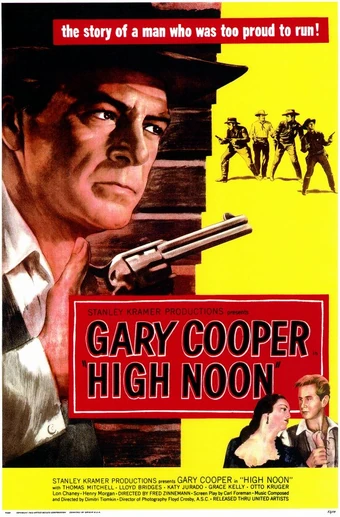
  • Intertextuality- 70s David Bowie ‘life on mars’ song, The Sweeney, ‘High noon’ poster, Wizard of Oz

Image result for life on mars high noon

Similarities and Differences between other crime dramas- The Bridge

Similarities

  • Nordic Noir- subgenre, ‘The Killing’
  • Mysterious- setting: dark tones/low-key lighting

Differences

  • Saga challenges gender norms/stereotypes and noir
  • Slow paced, rise in tension, lack of dialogue-(visually showing the audience rather than telling them)
  • Framing- feeling of isolation
  • Political statement- nuclear family, as if the body was a piece of art
  • Themes- Mental Health PTSD, Environment, Gender Neutrality

How does The Bridge and Life on Mars illustrate Steve Neale’s concept that genre must have elements of both repetition and difference?

Life on Mars illustrates Steve Neale’s genre theory by adapting and borrowing other elements of  genre. This is shown by the modern day (2006) setting being completely disrupted by the car crash and Sam Tyler travelling back to 1973, this change in setting and narrative highlights the mise-en-scene shift as Sam sees the sign that is planning to build the highway where the accident occurred. Sam wakes up next to a classical 70s car highlighting this shift in narrative and time era as the modern audience would notice that his clothing was different, alongside the ‘stereotypical’ police officer outfit. This links to Neale’s theory because it shows that there are still elements of police procedurals whilst also incorporating a modern-day sci-fi twist to the show, with the audience questioning if he is in a coma. Likewise this change is also shown in The Bridge, the Nordic noir genre is exemplified through mise-en-scene and use of colour saturation and contrast, the noir genre is inspired by American 40s cinema yet The Bridge creates a slow pace to create a rise in tension for the audience.

Both TV shows use contextual references based on the geographical locations of the programmes to make statements surrounding societies’ attitudes and beliefs. Whilst Life on Mars comments on 70s attitudes towards women, personified by Gene Hunt, it also uses a compromising character such as Sam Tyler to highlight the change in societies views from that time period. The Bridge uses a lesbian victim in the mannequin ‘nuclear family’ to suggest that the views on homophobia is still prominent in modern day society- this is also represented through the character of Hanne, a more politically-incorrect detective who challenges Saga.


Post-modernism

Argues that what is encoded is real, but offers a hyper-reality. (chocolate orange example).

Police stations: How do we know its not an exaggerated version of what it is? We based what we know about police stations on tv representations 

Intertextuality- acknowledgement of existing media texts

hyper-real version of reality

Life on Mars:

hyper-real version for Sam: modern day 2006

Simulacra: 70s world

How far is The Bridge a post-modern text?

  • Nordic Noir Genre: Implicitly referencing American 40s cinema
  • The diegetic world of The Bridge is a hyper-reality- Sweden and Denmark from a mediated perspective, linked to stereotypical national traits and cultural values
  • Is Saga’s professional world hyperreal? Based on our perception of an institution (police force) that is itself a constructive ‘simulacrum’ rather than experienced first hand. How do we know that the olice force is like this?
  • It shares similarities of style with other Nordic noir
  • There are other intertextual references- e.g. stylistically it is heavily influenced by film noir, its female focus and mood reflect the bleakness of dramastics such as Ibsen and Strindberg, its framing and mise-en-scene
  • It is ambiguous in terms of its plotlines and moral compass
  • There are anti-realist elements within the narrative-e.g. Henrik’s “family”- compared to Life on Mars ‘fake’ world
  • The creation of Saga as our heroine is ironic and self-reflextive- “high functioning socio-path”- Sherlock Holmes?

Binary Opposites- Levi-Strauss

Is the narrative driven by binary oppositions?

  • Saga vs Hanne
  • Sweden vs Denmark
  • Nuclear Family vs alternative family
  • Social awareness vs Social Unawareness
  • Past vs present
  • Illusions vs reality
  • Light vs darkness
  • Tact vs outspokenness
  • Secrecy vs openness
  • Entrapment vs freedom
  • Anxiety vs calm
  • Vengeance vs justice
  • Child vs parent
  • Duty vs personal feelings
  • Domestic vs professional
  • Family vs isolation
  • Loyalty vs betrayal

Story arcs/ Character arcs

Character-

  • Saga- her learning cruve in terms of relationships, her backstory, her function in the narrative
  • Saga’s family and relationship with her mother
  • Pettersen’s and Lillian’s relationship
  • The partnerships and team dynamics (e.g. Hanne)

Story-

  • The case- who killed Halle Anker? Why was the family scene set up?
  • Who is Alexsandr and what is his role in the narrative?
  • What happened to Henrik’s wife and children?


ISP19- Television- The Bridge and Life on Mars

Similarities and Differences between Life on Mars and The Bridge

Similarities

  • Both are the police procedural genre
  • The relationship between the titles of both programmes, Life on Mars linking to the David Bowie song in the same name, with the relationship of the song playing at the time when Sam Tyler is hit by the car. The Bridge directly references the setting of the Bridge between Sweden and Denmark, where the first murder on Series 1 took place, linking the two countries’ police together.
  • Unconventional settings- Life on Mars includes Manchester, which typically isnt used much in TV and is typically iconic settings such as London with London-based actors. The Bridge uses the relationship between Sweden and Denmark and uses several different locations.
  • Both have long introductions into the main disruption of the series, hooks the viewer into watching more
  • Use of suspenseful music in action moments- discovery of a body, missing person or chasing scenes
  • Both series involve the police being the ‘good guys’ and trying to capture a murderer
  • There are several scenes which involve insights into the personal relationships of the characters. Life on Mars use the relationship of Sam and Mia at the beginning, as well as when he meets Annie. The Bridge shows insight into Saga’s life with references to her relationship with her mum.
  • Both main characters are extremely work-focused. Life on Mars: Sam Tyler. The Bridge: Saga Noren.
  • Plain settings and use of artificial lighting. Examples- Life on Mars: Slow-motion scene of Sam Tyler walking into the 70s police station. The Bridge: Most places have a plain colour palette, particularly reflecting the urban environment. There is also the initial first-scene with the setup for the crime-scene where there is fixed lighting to counteract the dark surroundings.
  • Clashing of personalities- Life on Mars: Sam Tyler ‘good cop’ and Gene Hunt ‘bad cop’. The Bridge: Saga Noren and Hanne Thomsen clash to due ‘political correctness’ and the police procedural approaches
  • Both shows address issues in society. Life on Mars: the inequal treatment of women and views of Gene Hunt. The Bridge: References to LGBT and a lesbian murder victim.

Differences

  • Life on Mars uses two male main characters- Sam Tyler and Gene Hunt, also references to 70s context involving the oppression of women. The Bridge uses two female main characters Saga and Hanne
  • The Bridge- Saga is also represented as less professional and more blunt towards other people.
  • The topic of the main murders in the programmes are also built on differently in the two shows. Life on Mars starts with the chasing scene with the whole action of catching the presumed ‘killer’ and the interview scene where the crime was revealed to the audience. This therefore introduces them into the narrative to emphasise with Sam Tyler. The Bridge on the other hand, introduces the initial crime scene discovery in the first scene of the programme.
  • Life on Mars use the disruption of narrative, with the car crash, time travel and the disappearance of Mia, whereas The Bridge’s narrative mainly staying consistent throughout.
  • Life on Mars works on the construction of time and plays on this idea. It uses the concept of time travel with a sci-fi twist.

Postmodernism Theory

The boundaries between the real world and the world of television repeatedly break down. Throughout the series, Sam questions whether or not the experiences are real, asking if he is mad, in a coma or back in time. At different points, characters appear to step out of his television set to address him directly, this shows this concept of the disruption of narrative in the programme and Sam’s perception of it. In the opening scene, this happens when he is watching an Open University broadcast, while in subsequent episodes it is the BBC ‘Test Card girl’ who steps out of the television and into the ‘real’ world. Sam Tyler steps into this perception of what is real and what isn’t. Throughout there are references suggesting that he is in a coma, with background voices sounding like a hospital alongside bright lights and the continuous perception of reality being distorted.

The Bridge does not include this and instead has an inclusion of a structure. With the initial scene pointing out the crime scene, following stereotypical police procedurals of the time with the narrative of “Who done it?”.

Structuralism Theory

Life on Mars works on the perception of opposites, with the concept of time being a main feature. It includes the themes of present 2006 with modern cars, uniforms, settings and phones alongside the disruption of the car crash meaning that Sam appears to be transported back in time to 1973, with not only the entire setting changing to represent this time, but different characters representing that time period, such as Gene Hunt having harsh views and Annie Cartwright being more subdued. The clash between Gene and Sam is clear from the start, with Sam providing modern-day viewpoints on society contrasting with Gene Hunt’s perception of hierarchies, roles and attitudes. The difference between instinct and procedure is evident as the concept of reality is continuously questioned.

The Bridge focuses on the relationship between Sweden and Denmark, it shows the clashes between societies and its general views and acceptance. Saga (Swedish) is introduced as the main character, she is represented as blunt but works hard on the case, and she clashes personalities with Hanne (Danish) who has a more politically incorrect view on people and the way in which it is constructed. It is interesting that both characters in the show are presented as imperfect. From the start of the programme the audience is introduced into the ‘nuclear family’ crime scene, involving a lesbian woman, this can perceive to be a commentary on homophobic societies and attitudes particularly focusing on Denmark.


Explain what you understand by intertexuality. Refer to the set episode of Life On Mars to support your response.

Life On Mars is a British crime drama, the television show subverts from typical themes by implementing the science-fiction genre into the show, giving it a unique selling point to the viewer. The dynamic of the genre is shown in the show through Steve Neale’s genre theory. The use of police uniforms, cars and stations apply directly to the genre. However, it subverts from stereotypical police programs by having a 2006 show set in the 70s. Life On Mars has adapted from taking elements from both genres and combining it together.

Whilst Life On Mars could be viewed as a conventional police procedural, these stereotypical conventions are challenged when Sam is hit by a car and travels back in time. The mise-en-scene completely changes highlighting the change in time period and characters reflecting the disruption from conventional police procedural. The show mimics the 70s show The Sweeney, creating a nostalgia for the audience whilst contradicting some of these attitudes to suit a modern-day audience. Therefore the attitudes and opinions were vastly different to 2006. For example, the character of Gene Hunt being represented as a toughened cop, directly reflecting the character of Jack Regan. Sam Tyler, from the era of 2006, alongside the modern-day audience are able to recognise comments made by Gene Hunt and therefore highlight the change in societies attitudes towards gender and race. Gilroy’s Postmodernism theory shows the difference in police work alongside the persona of 70s police officers vs modern police officers. Furthermore, the postmodern culture is rarely represented in mainstream media in present day, therefore most audiences would never of experienced The Sweeney in its prime. Police work is also extremely different, with the juxtaposition of the 70s high-speed dramatic car chases against the modern office work of the police. The character of Sam Tyler is there to produce insight and influence on the other characters, showing that society is capable of changing.


ISP19- Television- The Bridge and Life on Mars

To what extent does the set edition of Vogue magazine target a particular audience? Explore specific aspects of the set product in your response.

Vogue directly targets a female audience through the use of the front cover depicting Sophia Loren in extreme makeup and colourful outfits. The front cover directly targets the audience through this reinforcement of fashion and feminine hobbies. The front cover depicts Loren in Turkish headwear representing Turkish culture yet using an Italian model to represent this highlighting the lack of diversity and acceptance at the time. The use of greens and blue undertones directly link to the links to “sea” and “swim”, lexis written at the bottom of the page which reinforce the exotic representations of women of Turkish backgrounds. Loren’s face in the image reflects a neutral pose to therefore draw away attention from her expression and more on her clothing and makeup. The July 1965 cover directly target white middle-class women of the time. bell hooks ‘feminist’ theory shows this as the large majority of the models fit this demographic, reflecting that Vogue’s message towards men or women from other backgrounds weren’t welcome.


The July 1965 edition also included various adverts which reinforce this perception of white middle-class women demographic. The imperial leather advert is an example of this, with a large image depicting a white woman looking caringly at her baby, this portrayal is shown throughout with links to “family” and “children” which the audience are shown to inflict an emotional response from, particularly when the image takes up most of the page. It generates a sense of trust between the consumer and the brand that it is gentle enough for babies and therefore the audience can rely on the product. This is also shown in the Revlon advert, with a tutorial on how to get a particular makeup look with suggestions of products. This feminine references reinforce this idea of a female target audience as well as the concept of a disposable income reference a middle-class audience.


On the other hand, there are articles that aren’t necessarily targeted at feminine audiences with the picnic section, referencing family life and a written account of what picnics were like for the writer. This is also shown in the article titled “money”, where the audience is given advice by the writer on the right ways to deal with money, which is generally a gender-neutral subject whilst also reinforcing the middle-class demographic. Likewise, it could be argued that the articles on makeup create a perception of feminine hobbies and in reality anyone is able to do these looks. However, based on the context of society during the 1960’s it is unlikely that this was widely accepted and intended by Vogue.

Nordic Noir Genre- The Bridge

  • Reoccurring scenes
  • A situation where something goes wrong


  • Elements of narrative
  • References to domestic violence “The Girl With The Dragon Tattoo”


  • Stock characters
  • “The Girl With The Dragon Tattoo”- is different from typical character, she dresses differently and has piercing, an outsider


  • Iconography
  • Unsettling camera angles


  • Setting
  • Grey and Gloomy setting- dreamy society
  • Scandinavian society and snow- juxtaposition of the different kinds of snow


  • Themes
  • ‘The Girl With The Dragon Tattoo”-


  • Style

Nordic- Noir origins

What caused the rise of Nordic Noir and what you think the codes and conventions of the genre are?

Inspiration of The Bridge came from The Girl With The Dragon Tattoo and inspired by Karin Fossum books, the relationship between the killer and the victim. Karin Fossum knew a killer which inspired the characters

The Bridge

Series 3 Episode 1

  • Series 1 began with a body found half way between Sweden and Denmark on the Oresund Bridge linking Malmo to Copenhagen.
  • Series 2 ended with the main character Saga turning in her partner Martin for murdering the man who killed his son
  • Series 3 Ep1: When a prominent Danish gender campaigner is found murdered in Miami, Swedish detective Saga Noren is assigned a new Danish colleague to help with the investigation, but their relationship does not get off to a good start with feelings still running high about her involvement in sending previous Danish partner to jail for murder.

The Bridge is an international TV show, it was aired on the BBC although it was not originally made by them.


Television as a Global Industry- Text book pg 173

Television as a Global Industry

What is meant by Globalisation?

The international context in which television programmes are produced

What is meant by Global reach?

The international popularity of genres such as Nordic noir (the 3rd season of The Bridge was shown in over 150 countries). The global reach of Netflix is now available in every country except from Syria, North Korea and Crimea.

The rise of Non-English-Language programming on British television

Which British channels are at the forefront of broadcasting NELP?

The BBC and Channel 4 have been the forefront for the trend

Which channel is considered the home of Nordic noir? Why is this?

BBC 4 as it has become increasingly prominent in recent years, programmes such as The Killing, The Bridge and Modus have become a part of the brands identity.

The rise of international Co-Productions

What are international coproductions?

They are international production companies from different countries that are working together for a particular production.

How was The Bridge financed?

They received support from several European public service broadcasters, including Sweden’s SVT, Denmark’s DR, Germany’s ZDF and Norway’s NRK.

How might the quality of this type of production be enhanced?

The cost of the co-production can be shared between the different parties involved. Without this collaborative approach to production, many projects would not have the funding to get off the ground. They also have bigger budgets to work with.


Economic Context- Text book pg 174-175

How was the 3rd season of The Bridge funded?

They received funding from the Copenhagen Film Fund-(a Danish organisation that provides funding and support for film and television projects in the Capital Region of the country), the Ystad-Osterlen Filmford -(A Swedish organisation that provides funding and television projects in the Ystad-Osterlen region of the country) and Film i Skane- (A Swedish organisation that provides funding and support for film and television projects in the Skane region of the country._

What is the European Unions Creative Europe programme?

They provide grants for support to the production and distribution of European television products. This is done through the MEDIA sub-programme, which is part of the EU’s ‘Creative Europe’ programme.

What must a production do in order to qualify for this type of funding?


Cultural Industries Theory- David Hesmondhalgh

Minimise risk and Maximise Audiences= Maximise Profit

Therefore media texts tend to be more generic and less creative

  1. Is maximising audiences of equal importance to all TV companies?
  2. Do some TV companies cater for more niche audiences?
  3. Is there less pressure on PSB’s to maximise audiences? Are they more able to take risks?

Regulation of TV: Livingstone and Lunt’s Theory- page 179-9

Who regulates TV in the UK?

Ofcom

What are their obligations to citizens?

Attempts to further of the citizens by protecting viewers from offensive or harmful and protecting people from unfair treatment and ensuring that their privacy is not invaded.

How do they attempt to further the interests of consumers?

Ofcom ensures that TV services are provided by a range of different organisations and ensuring that a wide range of high-quality programmes are provided which appeal to a range of tastes and interests.

What effect has globalisation had on the regulation of TV?

the Communications Act 2003 saw a significant shift towards deregulation as it liberalised media ownership rules in order to attract more investment in British markets. This meant it is easier for companies to compete in the global marketplace. Yet the relaxation of rules regarding ownership placed more power in the hands of major companies and removed some of the protection that regulation offers to citizens.


What is Film Noir?

Using RESISTS:

  • Reoccurring scenes
  • Elements of narrative
  • Stock characters
  • Iconography
  • Setting
  • Themes
  • Style

Notes from the video:

  • Protagonist often seen as detectives
  • Noir- defined by the fall of a character- example Sunset Boulevard, involves forced into a situation, it also involves the downfall of the protagonist
  • Often female protagonist
  • Alfred Hitchcock’s ‘Notorious’, focusing on twists and turns out to be by manipulation
  • Reflecting the time period, lots of 40/50s involved references to the war
  • ‘Ministry of Fear’, unwillingly being pulled into a situation
  • ‘Chinatown’, references government corruption and politics, a reflection at the time and the effects of war
  • Post 50s referred to as Neo Noir, Retro-Noir is the

Recurring Situations

  • Use of flashbacks
  • Voiceover
  • Ending often negative for protagonist

Elements of narrative

  • Complex narrative and convoluted plot

Stock Characters

  • Sexually attractive femme fatale
  • Disillusioned, flawed anti-hero (detective), often with a mysterious past

Iconography

  • Shadows, Blinds, Cigarettes, Neon, Rain, Alleways, Trenchcoats and Trilby

Setting

  • Claustrophobic and menacing setting; closed frames connote entrapment; canted angles suggest a world gone awry

Themes

  • Moral decline and ambiguity
  • Themes of corruptions, greed, obsession, duality, isolation

Style

  • Cynical, pessimistic, tone and mood

ISP18-Music Videos

Task One

Riptide uses the low budget concept style to therefore displace the montage category. The music video doesn’t necessarily need a high-end budget in order to be conducted and therefore they are able to create the music video appear quirky and more unique, subverting from mainstream music videos. The montage edit is a quick idea which does not require high-end editing, equipment or objects as it is only being used on a short span basis. Furthermore, the role of technology now allows us to share the videos we like with wider audiences thus pushing the narrative of diversity in the market. The genre of the music is relatively niche, with only some people being aware of indie-music yet the popularity of the music in the charts makes this a more mainstream reaction to a low-budget concept.

In conclusion, I think that Riptide pushes small indie values to the wider popular market whilst also keeping the music itself within that genre. The music video was extremely popular, meaning that the amount of views it receives is recommended to other people with similar taste. Therefore this makes Riptide viewed on a platform with reaches global markets resulting in the low-investment music video becoming extremely cost effective.

Task 2: 

  • Avant-garde is originally a French term, meaning advance guard (the part of an army that goes forward ahead of the rest).
  • Reference to art in France in the first half of the nineteenth century.
  • Henri de Saint-Simon, believed in the social power of the arts and saw artists, alongside scientists and industrialists, as the leaders of a new society.
  • It is applicable to all art that pushes the boundaries of ideas and creativity, and is still used today to describe art that is radical or reflects originality of vision.


https://www.youtube.com/watch?v=054OIVlmjUM

What possible meanings can you take from this film?

Luis Brunel and Salvador Dali got the idea for the film after discussing various surrealistic dreams which they had experienced. The only rule they made about writing the script was to exclude anything that could be interpreted as logical meaning. Therefore the audience is left with a film, devoid of any hidden meaning. This produces a narrative of a pure stream of unconsciousness available for analysis.The film is just a depiction of dreams, or nightmares in which we as humans experience. In this case the viewers become the ‘sleeper’ watching the dream/nightmare. It could be interpreted as a film based on the concept of suppressed human emotions.

What are some of the most dominant signifiers in the film?

It is a montage of different ideas and thoughts, particularly conveyed through a dream-like state. The film is known to be necessarily disturbing to audiences with scenes such as the eye-ball cutting scene and references to death throughout, subverting from the dream-like state to have elements of nightmare fuel. Some of the most dominant signifiers in the film include an abstract look at the way in which we view these dreams. The film is rather graphic in some places, particularly involving peoples body parts and physical injury.

What parallels can be drawn between this and Riptide?

It could be argued that the parallels between this and Riptide include the suppression of human emotions which are conveyed through both concepts. They are both montage edits and shorts whereas they both convey opposite meanings. Riptide plays on the literal meanings of the texts whereas the film excludes as more literal sense as possible and instead trys to have no meaning at all.


Task 3

Representation – Gilroy’s Postcolonial theory

Read and summarise this section on Page 95 in your textbooks in relation to Beyonce’s Formation only. Summarised notes on your blog.

  • It incorporates binary opposites based on notions of difference and otherness in terms of race and ethnicity.
  • It positions Beyonce as the strong black woman
  • Challenging typical notions in the postcolonialism theory and legacy
  • Certain elements of the video contradict this, with the “exotic” and “dangerous” stereotype in relation to the representations of race.

In conclusion, Beyonces Formation both conforms and challenges the ideas in the Post colonialism theory. The music video directly demonstrates Beyonce as a strong black female in the role with giving no men a primary focus or feature in the video. There is also a strong use of empowerment by Beyonce with reference to letter her daughter embrace her natural hair. In contrast, there is also the suggestion that women of this ethnicity are considered “exotic” due to the way in which the women are represented therefore suggesting that they are seen as luxuries alongside men, furthermore the suggestion of “danger” with links to police brutality also may contradict this.


Music Videos- Representation of women

Starter Activity- social context: Feminism

What does the word feminism mean?

  1. politically, socially and economic equality of the sexes
  2. They wanted the right to vote
  3. Emmeline Pankhurst
  4. 1918
  5. 1975
  6. Margaret Thatcher
  7. 1979
  8. 1990
  9. Society in which there is a hierarchy and Inequality of wealth, social values and rights.
  10. 10.6%

Beyonce Formation

  • Reference to wig shops- highlight the natural hair – little reference to men embracing their natural hair
  • Mostly wearing dresses- provocative clothing and twerking
  • Contrast between her wearing a black dress and the men wearing suits- she swears
  • “i slay” empowerment

Van Zoonen Feminist theory

“the display of women’s bodies as objects to be looked at is a core element of western patriarchal culture”

  • Is this video text reinforcing or challenging the objectification of women?

Formation is a complex text in regard to gender representation.

The dance sections where she wears short/tight or revealing outfits, as well as some of the sexualised lyrics vs powerful images which showcase female dominance


bell hooks feminist theory- 3 main points of the theory

  • “feminism is a struggle to end sexist/patriarchal oppression and the ideology of domination
  • …feminism is a political commitment rather than a lifestyle choice
  • …race and class can also determine the extent to which individuals are exploited and discriminated against.”

“Feminism is a struggle to end sexist/patriarchal oppression and the ideology of domination”

  • Antebellum dresses- bell hooks theory

Does Beyonce fit this model?

  • She headed a campaign in 2013 called “Chime for a change” which aimed to spread female empowerment

bell hooks “I see a part of Beyonce that is in fact anti-feminist- that is a terrorist, especially in terms of the impact on young girls”


Beyonce is a feminist…

IMG_1631


Riptide

Van Zoonen and bell hooks’ feminist theories

Riptide conforms and subverts from these theories. The video seems to be reinforcing a sense of patriarchal domination through the objectification of women.

Conforms: Objectifying women

Point: The camera is often the voyeur to women’s mistreatment. The camera shows us shots of women escaping danger or being the victims of violent acts.

Evidence/Examples:

  • Female hand being stabbed by a knife
  • The lip-syncing woman clutching her slit throat
  • Women tied to a tree
  • “Darkside” women screaming and being dragged under beds

Subverts: Social message regarding how the media represents women

Point: The video’s representations of women also seem to challenge typical representations of women in the media

Evidence/Examples: the lip-syncing performer

At first she has immaculate the makeup and is framed and lit in a flattering way,arguably conforming to social norms of beauty and glamour associated with mainstream media texts.

As we repeatedly return to this character she becomes increasingly dishevelled, her makeup smudges and her expression becomes more and more vacant as she sings “the words wrong”

Riptide Representation and Analysis

Representation

Female Representations

  • Victimised Women- tied to trees, dragged under bed, tortured at the dentists
  • Parallels to the way in which women are represented in the media
  • Woman tied to tree escapes- capable of saving themselves
  • High-camera angle to make women look small
  • Terrified facial expressions
  • Long- uncomfortable takes of woman singing the words wrong.
  • Connotes a message- shouldn’t objectify the woman in question- makes the audience uncomfortable to see these bruises and blood
  • Woman at the microphone- Spotlight on her with the makeup and hair done, the cuts back to the woman. Her eyes glance off camera- create a tense and scary atmosphere. Make the audience feel scared for her- and why she has been assaulted. Shes viewed as important
  • Sexualisation? Seeing their legs and feet
  • Some images of violence- stabbing and guns. The violence against women. The sexualised pictures of women alongside violent.
  • Video invites the audience to interpret the text
  • bell hooks- end oppression- is the video trying to reinforce/challenge this?

Men Representations

  • See men as voyers- watcher and spying on women
  • Shots of men in reasonably powerful positions
  • Typical patriarchal views of men on society

Vance Joy

  • Indie genre-unconventional approach to these representations and shock factor
  • Vance Joy wanted to break into the American market with this video- links to American dollars
  • Shocking-Viral publicity?

riptide pdf document:

riptide


IMG_9091


Riptide scene-by-scene analysis Sheet

Riptide – Analysis

ISP 17- Advertising

Task 1: Pre-1950s Print Advertising  – Look at some of these other media products from the time. 200-250 Words

The target audience for the domestic and beauty-related products would be aimed at the female figures in the house whilst male audiences would be targeted with industry related products such as cars. They please the audience by promoting products that would suit their needs and desires. I think that the reason they were popular at the time is because the audiences weren’t aware of other social concepts and therefore agreed to the attitudes and beliefs exhibited. Furthermore, this change in society was triggered by the movement in roles from WW2. The values about gender share the same concept with the set product through displaying this sense of women having limited hobbies which are restricted by society, with women being perceived as passive in many media texts. Furthermore, this idea that women in the media always represented certain factors associated with home, beauty, family and to benefit their husbands. This ideology was changed by the world war which consequently moved all the roles round for the women to complete, therefore changing and becoming socially aware of the imbalance.

Task 2: Viewing and Analysis Task (200-250 words)

FilmHis Girl Friday (Howard Hawks, 1940) – clip

The audience would have taken away from this different viewpoints based on their gender, the male viewers would have sympathised with the man whilst female viewers sympathised with the female. The film was popular at the time as it produced a middle-ground of society’s progression to equal rights. The viewpoint on divorce being condemned whilst the film providing insight on the personal difficulties a marriage can have. This ideology would have been projected by the changing roles with world war 2 and housewives showing their independence through taking on chores and stereotypes which were different than typically depicted. Furthermore, the video shows traditional beliefs and progressive beliefs becoming a middle-ground for future discussion. The male perspective on divorce was represented by the character whilst the woman is dressed extremely similar to the male, almost connoting that women weren’t capable of having their own fashion sense. The man also belittled her, showing him clearly not listening to her perspective. Whilst the female presents progressive attitudes with the woman having an opinion of her own and the divorce actually taking place. This is highlighted by the woman created mockery of the man, something which would not have taken place before.

Task 3: Viewing and Analysis Task (200-250 words) – Watch this clip from the TV show Mad Men. Though made recently, it portrays American society in the early 1960s.

The perception on the way in which men and women behave are outdated, women are represented as only caring about the lipsticks and nothing else, they are viewed as inferior to the men. The men mock the women and their intelligence, with the men physically spying on the women, and calling the women “morons”. The women are viewed as passive, and being incredibly childish about the situation as well as being sexualised. There is a presence of mockery and humiliation surrounding the one woman who challenged the man, with the other women taking the mans side. This would be considered inappropriate in todays workplace as it is seen as sexist, but implying that all women would be amazed by the lipsticks. The way in which men and women are expected to behave has rapidly changed since the 60s because of the feminism movements and laws being created in order to protect both genders against discrimination.

Task: Comparison to Set Text: Tide Print Advert (100-150 words)

These representations are similar in my set product as the women are seen as incredibly passive and domestic-based, the woman is depicted as physically hugging the tide product as she is so impressed by its performance. It also shows that women are easily impressed by products. The continuous use of “women” show that the product is intended and targeted towards this demographic. Men are represented as incredibly absent from the domestic product market with there being little mention of men’s contribution to the product. Contexts such as repeated patterns of representations throughout all of the media (television and films) create a sense of social norm and standards in terms of product advertisement.


Extension task- exam practice

a) Name the media organisation that owns The Daily Mirror

Reach plc

b) Identify two ways in which newspapers are distributed

Print and Online

c)  Briefly explain an advantage of one of these ways

An advantage of online distribution means that audiences can access the content from anywhere, saving time and money whilst staying up to date.

d) Explain how political contexts affect the newspaper industry, refer to the Daily Mirror to support your points

Political contexts in regard to The Daily Mirror include representations reflecting the social and political viewpoints of the reader. The Daily Mirror is a left-wing newspaper aimed at supporters of the labour party in the UK, and therefore the attitudes of this audience must strongly reflect in the newspaper in order to keep the same demographic. Furthermore, news stories surrounding political figures that represent other parties such as the Conservatives (UK) and Republicans (US), are right-wing therefore meaning that these representations are depicted as wrong and outdated by left-wing media sources. The depiction of Donald Trumps 2016 election win shows this well, with the iconic statue of liberty landmark represented as disappointed following the text “What have they done?”, this therefore showing that the election result as negative through directly addressing the audience.